
Concrete and Heavy Debris Disposal in San Marcos, TX
Concrete runs about two tons a cubic yard, and the Balcones caliche and limestone aren't far behind. Here's how heavy debris is sized, kept clean for recycling, and hauled legally.
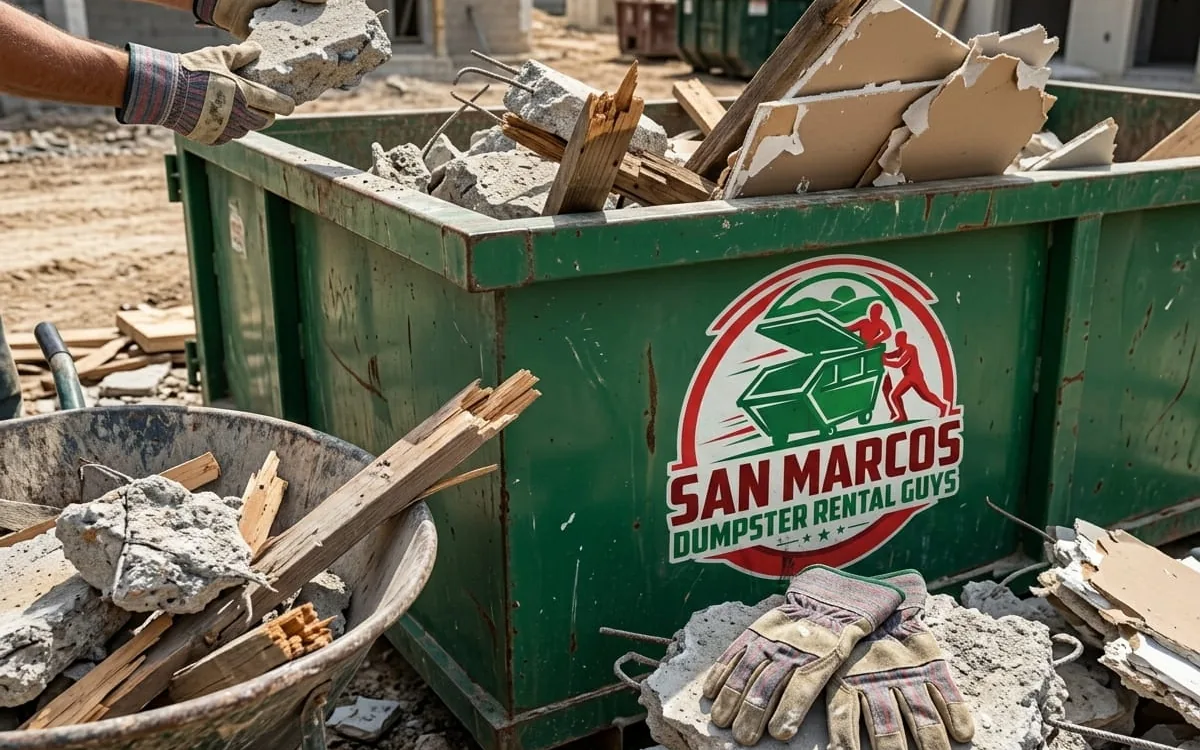
In this guide
- Why heavy debris needs its own approach
- The Balcones caliche factor
- Keep it clean and it can be recycled
- Placement for a heavy load
- Get a heavy-debris quote
Concrete, brick, block and the caliche and limestone of the Balcones Escarpment are the densest things you'll ever put in a container - so this work is all about weight, not space. Here's how a heavy-debris job is handled right in San Marcos.
Why heavy debris needs its own approach
A driveway or patio tear-out, a foundation, a section of block wall - the material is so dense that a small container reaches its weight limit while it still looks half empty. Concrete runs to roughly two tons per cubic yard.
So concrete and heavy debris almost always go in a dedicated 10 yard, sized to weight rather than volume. Fill a big box with it and you'd be far past what a truck can legally lift.
The Balcones caliche factor
San Marcos ground makes it heavier still. The Balcones Escarpment is thin caliche and clay over cavernous Edwards limestone, so any footing, foundation or trench dig brings up dense rock and caliche - some of the heaviest spoil you'll handle.
We size that rock like concrete: a dedicated small box kept under the weight limit, separate from the lighter mixed debris around it.
Keep it clean and it can be recycled
Clean concrete, brick and block - free of dirt, wood, rebar and trash - can often be crushed and recycled rather than landfilled, which is better all round and can trim cost. The key is keeping the load clean.
So on a heavy job we'll often set a dedicated box for the clean concrete and a separate one for the mixed debris. Rebar and heavy metal can usually be pulled and recycled as scrap too.
Placement for a heavy load
A container full of concrete has to sit somewhere a loaded truck can safely reach and lift it, so placement matters more than usual. We plank to protect the driveway and pick a spot with the access a heavy box needs.
A smaller box filled properly is normal here - it's not upselling, it's keeping you legal and out of an overweight charge.
Get a heavy-debris quote
Tell us the material - concrete, brick, block, caliche, rock, dirt - and roughly the volume, and we'll size it for weight and quote a flat rate. If it's clean concrete, say so, because that opens up recycling.
We'll get the right box on-site, placed for a safe lift, and haul it covered to a Type IV landfill where it's weighed.
Book a container in San Marcos
One flat rate covering delivery, seven days, pickup and disposal.
(737) 214-1227Questions readers ask about this
What size dumpster for concrete?
Almost always a dedicated 10 yard. Concrete is so dense it reaches the weight limit while the box looks half empty, so it's sized to weight, not volume - a small box kept legal.
Can concrete be recycled?
Yes - clean concrete, brick and block free of dirt, wood, rebar and trash can often be crushed and recycled rather than landfilled, which can trim cost. A dedicated clean box makes it possible.
Does caliche count as heavy debris?
Yes. The Balcones caliche and Edwards limestone come out of a footing dig dense and heavy, so that spoil is sized like concrete - a dedicated small box under the weight limit.
Why not just use one big dumpster?
Weight. A large box full of concrete would far exceed what a truck can legally lift. Heavy material goes in a smaller box filled properly - it's about the legal weight limit, not size.